4 minute read · Brand comparison
A base subscription is not the same as an enabled sender
Contiguity and LoopMessage are useful candidates for developers who want to assemble a messaging configuration around specific channels. Their price structures reward careful reading. A low general subscription on one page may not include iMessage, while a dedicated-sender price on another may need a phone-number option before the application can do what the buyer expects.
We checked the provider pages on September 28, 2026. This comparison uses published components to explain the configuration, not to issue a quote or claim that one supplier is always cheaper. The first deliverable for your project should be a list of required capabilities and a vendor-confirmed mapping from that list to the order.
| Decision | Contiguity | LoopMessage |
|---|---|---|
| Number model | Base number lease plus selected capabilities | Dedicated sender with selected options |
| iMessage price component | $69.99/month capability on a leased number | Light dedicated plan starts at $59.99/month |
| Phone-number cost | Base lease $9.99/month | Phone-number option adds $15/month |
| Other channels | SMS/MMS, voice and other capabilities priced separately | Fallback and other options listed separately |
| Initiating conversations | Confirm eligibility and use-case conditions | Initiation option adds $30/month with requirements |
Contiguity: do not confuse Unlimited with iMessage
Contiguity’s pricing page says its $19.99 Unlimited subscription covers SMS, MMS and email. iMessage is listed separately as a capability for a leased number. The published base lease and iMessage component sum to $79.98 monthly before possible setup fees, use-case surcharges or other capabilities. That is a component total, not evidence that a complete multichannel configuration costs the same amount.
Ask whether the number you intend to use is eligible and which additional capability supplies the fallback behavior your application needs. A provider offering both SMS and iMessage does not establish that every subscription bundles them together. Have the quote name each enabled channel and specify the treatment of inbound messages, outbound usage and any minimum commitment.
LoopMessage: make the sender options explicit
LoopMessage lists a Light dedicated sender from $59.99 monthly, a phone-number option, a separate fallback option and an option to initiate conversations. The latter options have dependencies and one-time fees. An email-address sender, a phone-number sender and an outbound-capable phone-number configuration should not be treated as the same item in the procurement worksheet.
Its FAQ also requires the relevant dedicated-sender setup, warm-up and recent recipient permission for initiating conversations. Confirm the applicable limits and intervals directly. If the intended job is responding after a user contacts the agent, a different arrangement may fit. Let the actual direction of the conversation determine the required options instead of automatically ordering every feature or assuming the base tier includes them.
Write a tiny configuration manifest
Use a short document with the sender identity, primary channel, fallback channel, allowed initiation, expected recipients and required events. Add a column for the exact plan or add-on that supplies each item. This is a procurement aid, not a new software system. It keeps a sales discussion, a developer’s implementation and the final order from describing three subtly different products.
Include one-time charges separately from recurring charges, and mark uncertain items rather than filling them with zero. If a price depends on the use case, retain the supplier’s assumption. If an option requires another option, record the dependency. A slightly longer worksheet can prevent an apparently inexpensive test from becoming a more costly production configuration after the architecture has already been chosen.
Prove channel transitions with controlled recipients
For a basic reminder-and-reply workflow, use a test contact your team controls. Submit the message, record the actual channel and verify the incoming response reaches the right job. Then test the supported non-iMessage path if that is in scope. A channel being available elsewhere in the platform is not proof it is activated for the sender used in the trial.
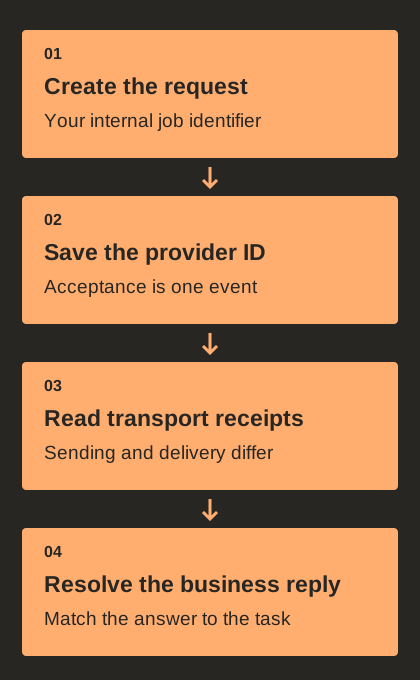
Ask how the service reports a request that is accepted but not yet delivered, and how you recover an attempt whose outcome is uncertain. Keep business intent separate from individual send attempts in your application records. That allows the team to investigate a transport problem without losing the underlying customer task or creating duplicate reminders when someone retries from a dashboard.
Decide using the enabled configuration
Contiguity is worth evaluating when its leased-number and capability approach fits a multichannel application and the eligible configuration is clear. LoopMessage is worth evaluating when its dedicated-sender options match the intended conversation model. Compare the complete recurring and initial cost after both suppliers have confirmed the same requirements.
Retain the configuration manifest with the API documentation and pilot evidence. Revisit it when adding a channel, changing the sender or moving from inbound replies to initiated messages. A configuration that was correct for a small assistant may be incomplete for a customer-facing reminder service. The most useful comparison is one that stays understandable when the application evolves, rather than a headline price copied once into a budget.