4 minute read · Practical field guide
Start with the questions the record must answer
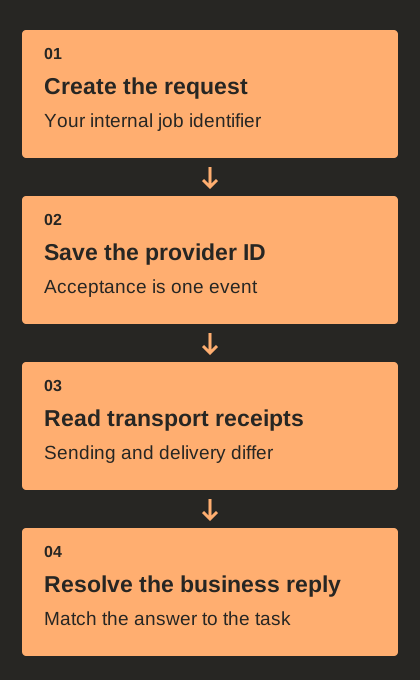
A customer asks to move a delivery. The application creates a business task, sends a reply and receives several provider status updates. An operator later needs to know why the message was sent, which attempt the provider processed and whether the delivery change was completed. One identifier may not answer all three questions.
Draw the entities before naming database columns. Include the customer-facing conversation, the underlying order or appointment, the intended notification, the transport attempt and any incoming event. The exact provider fields come from its documentation. Your application should preserve those fields while giving its own records names that describe the business work they represent.
Compare identity at the right level
Twilio documents a Message resource for an individual inbound or outbound message. Telnyx documents messaging webhook events with event identifiers. These are useful examples of different layers; inspect the selected provider’s payload and semantics before deciding which field controls deduplication or lookup in your implementation.
The following map is an application-design worksheet. A provider may use different names or expose additional conversation objects. Keep that distinction visible so a generic label in your code does not imply a capability the API does not provide.
| Identifier | What it represents | A useful responsibility |
|---|---|---|
| Business task ID | The customer job your application must resolve | Track the requested outcome across channels |
| Conversation ID | Your grouping of related communication | Find context and current ownership |
| Message ID | A particular provider message record | Look up transport state and evidence |
| Event ID | A particular delivered event notification | Track receipt and repeated delivery handling |
Link attempts to the reason for sending
Give the intended business notification a durable internal reference before submitting it. When the provider returns a message identifier, link that attempt to the notification and relevant business record. Preserve multiple attempts when they legitimately occur rather than overwriting the original identifier with the latest one.
This relationship helps investigate an uncertain request. The application can ask which notification it intended to send, whether a provider attempt is known and what reconciliation has already occurred. It also prevents an operator from treating two messages to the same phone number as the same business job merely because they share a destination. Phone numbers and customer records provide context, but they are not substitutes for attempt identity.
Deduplicate events without suppressing new information
A repeated delivery of the same event should not repeat a completed business operation. A later event about the same message may contain genuinely new status information. If your application treats every event sharing a message identifier as a duplicate, it can discard the update it was waiting for. Use the provider’s documented event identity and the semantics of the operation being applied.
Keep event receipt and processing outcomes durable. An event stored successfully but not yet processed needs a recovery path; an event already applied should be safe to encounter again. Some business operations also need their own deduplication key because more than one event can request the same action. Document that relationship explicitly rather than relying on an identifier’s name to carry the whole rule.
Group conversations without losing the business target
A contact can have several active orders, and a company can share one purchasing phone. Decide how your application groups communication and how a short reply is matched to an open question. Preserve the original message and candidate record references when the match is uncertain. A conversation grouping is useful context, not automatic proof of which order a customer meant.
When staff correct a match, record the change and its effect on future routing. Avoid silently moving historical activity in a way that hides the original processing decision. A covering colleague should be able to see the current task and understand any relevant correction. This is especially useful during migrations, contact merges and incidents involving ambiguous replies.
Test the identifier map with an incident trace
Create a fictional notification, a repeated event, a later status update and a customer reply concerning another open order. Inspect which records are created and which operations change business state. Restart a worker after it stores an event but before it completes the operation. The trace should remain understandable after recovery.
Finish with a short identifier dictionary in the repository or operating guide: source, entity, uniqueness scope, retention needs and supported lookup. Keep vendor identifiers in their original form. The map becomes a practical tool for developers and support staff when a customer asks what happened. It should explain the business purpose, transport evidence and remaining action without relying on a single overloaded “message” field.