4 minute read · Practical field guide
Treat acceptance as a recorded attempt
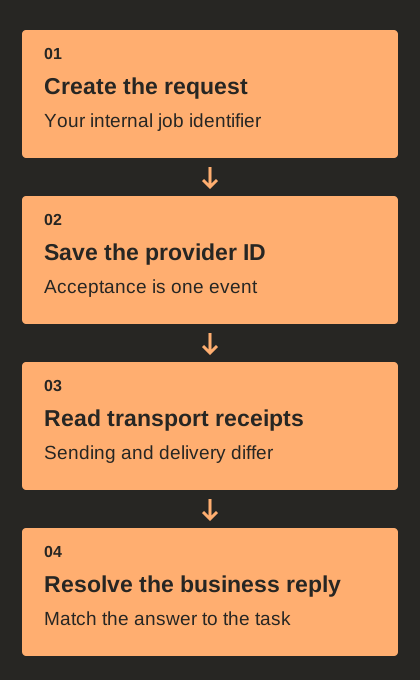
When an API accepts a request, save the returned identifier with the internal job that caused it. Do not announce business success solely because the HTTP request succeeded. Acceptance establishes a provider-side record under that API’s semantics; it does not show that a recipient read the text or agreed to its request.
If the request times out or the response cannot be persisted, preserve the uncertainty. Investigate the provider’s supported idempotency, lookup and event behavior before creating another attempt. A reliable recovery design can explain which job is being reconciled and why a resend would be appropriate. It should also recheck whether the underlying appointment or order still needs the message, since a delayed reminder can become obsolete.
Read queued and sent states in context
A queued message may be waiting for processing or available capacity. For time-sensitive work, queue age matters alongside status. Define when a notification loses its business value and how the application handles that condition. Do not assume that every provider supports cancellation at every stage; confirm the available operation and its result.
A provider-reported sent state is still a transport event. Twilio’s documentation distinguishes sending and delivery states, and other providers may use different names or meanings. Store the original value and document your mapping. If the interface reduces several provider states to a single label, make sure operators can still inspect the detail needed to investigate a delay or unsuccessful attempt.
Use delivery receipts without overstating them
A delivered status reports a delivery outcome as defined by the provider and route. It does not establish comprehension, authorization or a completed customer task. A customer who receives a scheduling question may still need to check availability. Keep the business request open until the relevant response or another permitted resolution is recorded.
Failures also need context. A request can fail before sending or receive an unsuccessful delivery result later. Preserve the status and error information and consult the provider’s recovery guidance. Some conditions may be temporary; others require correcting the destination, setup or content. An unconditional resend rule can repeat an invalid request or annoy a recipient. Give operators an understandable reason for each recovery action.
Process incoming replies as separate events
An inbound message needs its own durable event handling. Verify it using the provider’s documented mechanism, identify the conversation and prevent duplicate delivery from repeating the same business action. Match the response to a current open question. A phone number alone may not identify which order or appointment a short “yes” refers to.
If a reply changes the plan, update the authoritative business record and stop obsolete future messages. If the record write fails, retain the unresolved request and expose a recovery task instead of sending a false completion statement. Handle corrections and human takeovers explicitly. The customer experiences a conversation, but your application has to coordinate several independent events to make that conversation accurate.
Explore a state, then test your actual provider mapping
The interactive explorer describes six useful checkpoints: acceptance, queuing, sending, delivery, unsuccessful outcomes and incoming replies. Selecting a checkpoint changes the explanation and next diagnostic action. It does not send a message or display live provider data. Failed delivery is an alternative outcome, and real event sequences can include retries, delays and provider-specific states that the illustration does not enumerate.
Build tests around your mapping rather than copying the illustration as an exhaustive specification. Include repeated and out-of-order events, an uncertain send, an expired business task and a reply after a colleague resolved the request elsewhere. After each test, inspect both state machines and the operator-visible explanation. The workflow is ready to expand when its records tell a consistent story about what was attempted, what the transport reported and what the business still needs to do.